The LED produces light
The LED is soldered to the PCB. When powered, it emits light in different directions according to its package design and viewing angle.
Lumex optical application insight
A light pipe guides light from a PCB-mounted LED to the exact place a user needs to see it—such as a front panel, button, port, or status window.
Start with the basics
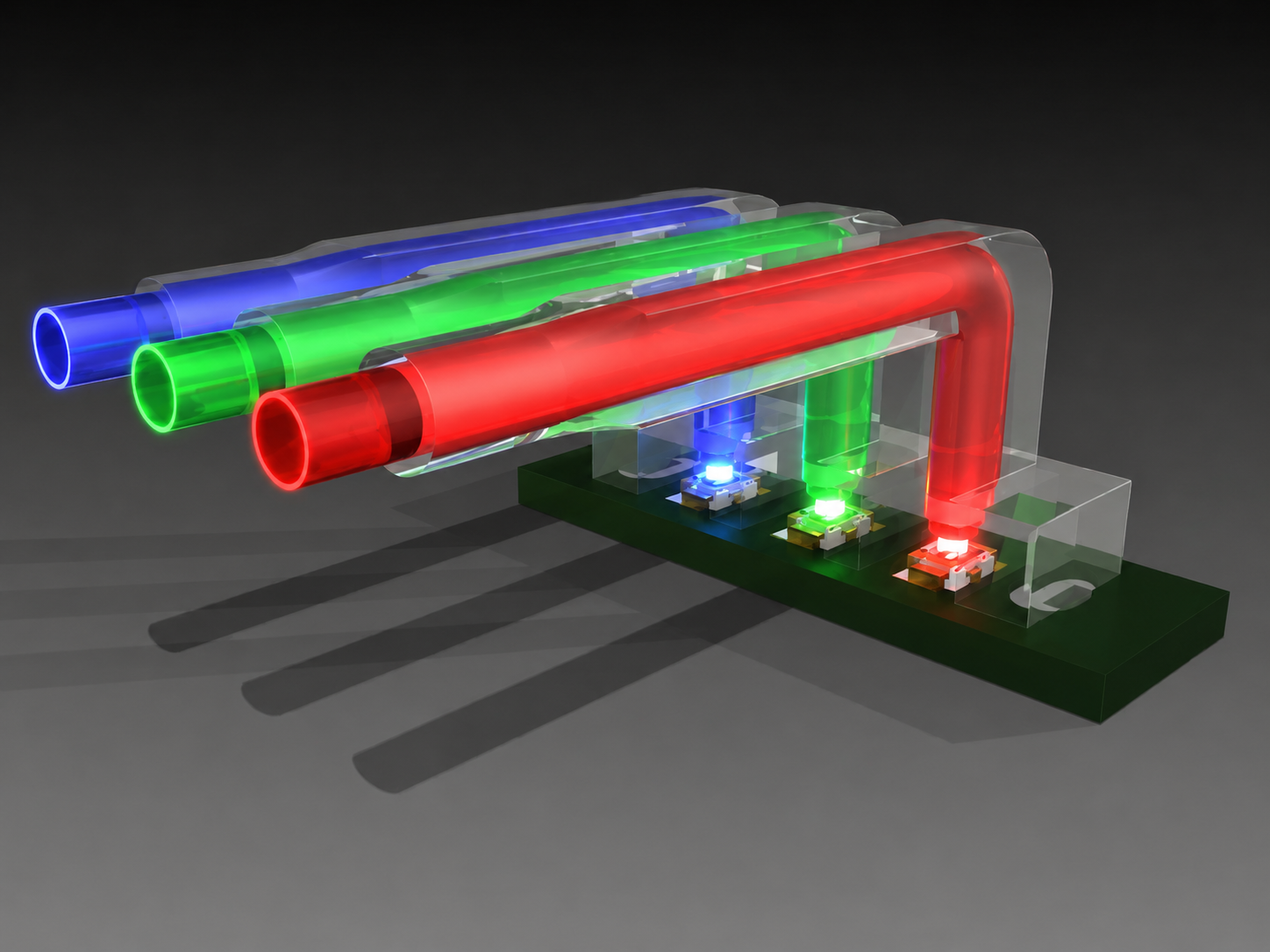
An LED light pipe is a clear or translucent optical component that carries light from one location to another. The LED is mounted on a printed circuit board (PCB) and produces light. The light pipe’s input end faces the LED, collects some of its light, and guides it through the product to a visible output at the panel.
Simply put, the LED acts like a light bulb, while the light pipe provides a route for its light. The light pipe itself requires no electrical power and does not generate light. It solves a common product design challenge: the PCB may sit deep inside an enclosure, but the user needs to see a status indicator from outside the product.
Rigid light pipes are commonly made from optical-grade PMMA (acrylic) or PC (polycarbonate). These clear materials allow light to travel through the component. Flexible light pipes may use other optical polymers or specialized constructions.
Material selection affects both light transmission and performance in the actual operating environment. To learn more about material differences, see the LED Light Pipe Design Guide.
The light’s journey
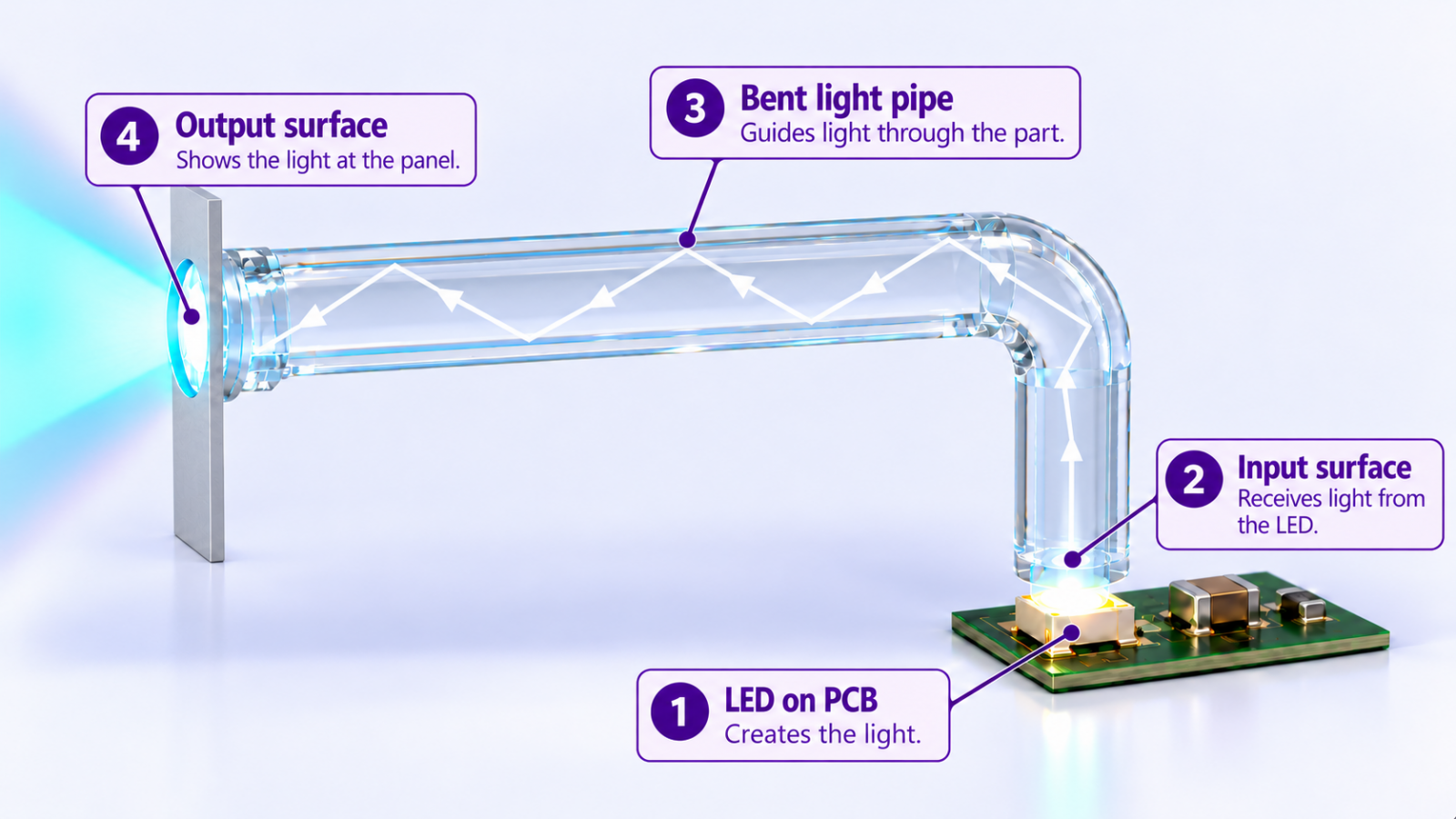
These four steps show how light travels from an LED to the product’s front panel:
The LED is soldered to the PCB. When powered, it emits light in different directions according to its package design and viewing angle.
The light pipe’s input end sits close to and faces the LED. Good alignment helps more useful light enter the clear optical material.
As light travels through the light pipe, it can change direction repeatedly by reflecting off the internal surfaces. The light pipe’s shape helps guide useful light toward the intended location.
An end face or side-output feature allows light to leave at a selected location, creating a visible point, line, symbol, illuminated button, or status window.
A key optical principle
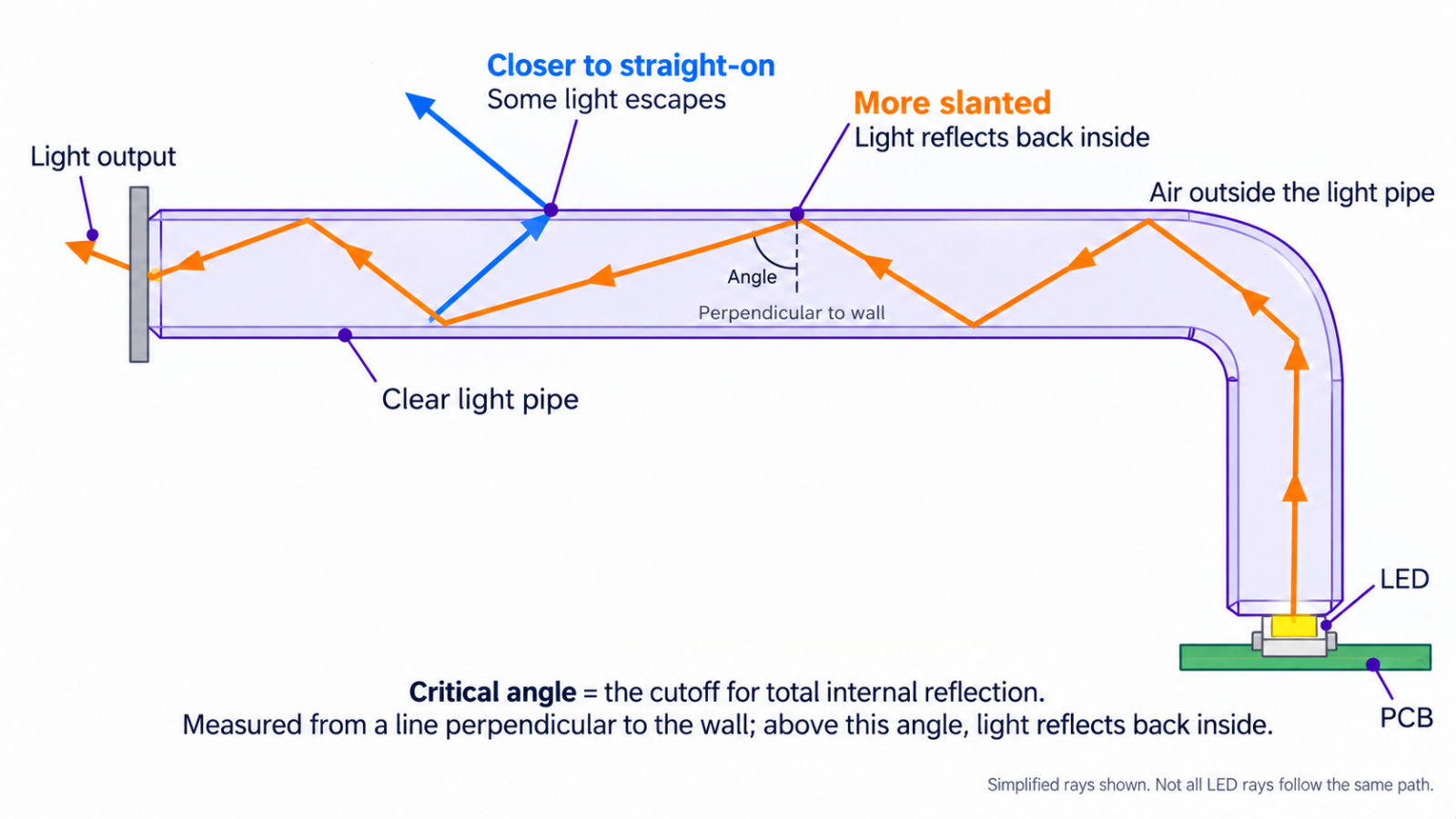
Inside a clear light pipe, some light rays strike the inner wall and reflect back into the material instead of passing through the surface. Under the right conditions, this is called total internal reflection (TIR). Repeated reflections can help carry light along the light pipe toward its output.
Imagine a ball bouncing between the walls of a hallway while continuing to move forward. The zigzag line in the diagram represents the path of a light ray—not a wire.
The critical angle helps determine how light behaves at the boundary between the clear material and air. When the angle of incidence is greater than the critical angle, total internal reflection can occur. When it is smaller, some light can pass through the surface. This angle is measured from the normal—an imaginary line perpendicular to the surface.